
Rosacea
THE COMPLETE GUIDE TO ROSACEA
In my clinic I would see several patients every week with a red flushed face, seemingly more common in women. Many of them have become used to this and just think they naturally have flushed skin on their face. I was watching a news clip the other day and noticed that King Charles, the King of the United Kingdom, has the same condition – rosacea.
Rosacea affects over 16 million Americans, yet it remains one of the most misunderstood and mismanaged skin conditions. If you’re dealing with persistent redness, burning sensations, or visible blood vessels on your face, you’re not alone – and effective management will cause significant improvement. I have seen patients improve within a week of starting treatment.
Rosacea is a chronic inflammatory skin condition that primarily affects the central face. And without treatment it worsens as you get older and can cause permanent damage to the skin, with thickening and scarring. With consistent care and the right products, most people can achieve significant improvement and prevent progression.
There are Four Types of rosacea, which often progress without treatment starting with vascular rosacea (flushing) and ending up with a permanently thickened skin, especially on the nose, with redness and inflammation, “phymatous” rosacea.
Vascular Rosacea -Type 1:
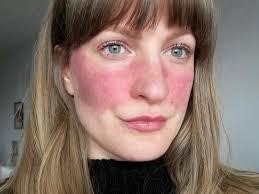
This is the most common form, with persistent central facial redness or recurrent flushing. Some people mistake it for sunburn. There are visible blood vessels (telangiectasias) that appear as fine red lines across the cheeks and nose. The skin often feels hot, burns, or stings, and may be particularly sensitive to skincare products and environmental factors. Some patients only get the flushing on their neck (especially the sides of the neck) or front of the upper chest- two places where sunscreen is often forgotten. This often flares up with exercise, and alcohol consumption.
Papulopustular Rosacea – Type 2:
This may look like adult acne, with persistent redness, inflamed lumps and pustules. But there are no blackheads or whiteheads, and the breakouts are typically concentrated in the central face area. The skin is sensitive and irritated.
Phymatous Rosacea – Type 3:
This is the most severe form, causing skin thickening and enlarged oil glands, primarily affecting the nose (rhinophyma). The skin is bumpy and may have swollen areas. This type is more common in men and represents advanced, untreated rosacea.
The photo of the man below shows a type 2 heading towards type 3. You can see the enlarged oil glands on his nose, and lumps (papules) on his cheeks.
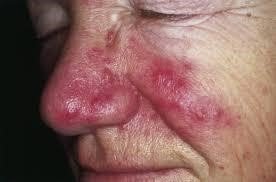
Photo courtesy of dermnetNZ
This patient above with severe rosacea needs treatment by a doctor.
Ocular Rosacea – Type 4:
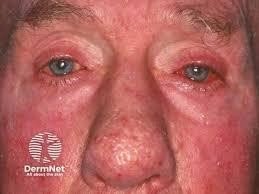
Photo courtesy of dermnetNZ
Affecting the eyes and eyelids, this form of rosacea causes redness, dryness, burning, and the sensation of having something in your eyes. Eyelids may appear swollen, and you might experience frequent styes or chalazions (inflamed, blocked oil glands around your eyelashes). I explain later on a bit more about what you can do to help your eyes if they are scratchy, watery, feel dry (both can happen) or irritated. And some people just get ocular rosacea, which is often undetected by treating professionals. Another name for this eye condition is chronic blepharitis.
Causes of Rosacea:
Vascular Dysfunction:
The blood vessels in rosacea-prone skin dilate more easily than normal. This leads to flushing and persistent redness. These blood vessels can become permanently dilated.
Immune System Dysfunction: People with rosacea have an overactive immune response in their skin, which creates chronic inflammation.
Demodex Mite Overgrowth:
These mites which are normally in the skin, can increase in number, causing the skin to become inflamed. Reducing the number of these tiny critters with antibiotics (Rozex, Ivermectin, Doxycycline) will cause a significant improvement. Often, within a few days of commencing treatment the patient will notice their skin isn’t so red and “stingy”.
Damaged Skin Barrier:
The skin barrier in rosacea is often impaired, leading to increased sensitivity, water loss, and sensitivity to irritants and environmental triggers.
Genetic Predisposition:
Family history plays a significant role – if your parents had rosacea, you’re more likely to develop it.
Common Triggers to Identify and Avoid
Environmental factors:
- Sun exposure (the most common trigger)
- Weather extremes-Wind and cold weather, or Hot, humid weather.
- Rapid temperature changes
Lifestyle triggers:
- Spicy foods, hot beverages, alcohol (particularly red wine)
- Stress and emotional factors
- Intense exercise or overheating
- Hot baths or saunas
- Sitting too close to a fireplace or heater- any radiant heat can aggravate rosacea.
Skincare and cosmetic triggers:
- Skin products with fragrance/ perfumed.
- Alcohol-based toners or astringents
- Physical scrubs or harsh exfoliation
- Some sunscreen ingredients (those with chemical filters, while those containing mineral blockers like zinc or titanium are less likely to irritate.
Treatment Approach
Daily Treatment Regimen for Rosacea
Morning Routine
| Step | Product Type | Recommended Products | Purpose | Notes |
| 1 | Gentle Cleanser | CeraVe Hydrating Cleanser, OR Vanicream Gentle Facial Cleanser | Remove overnight buildup | Use lukewarm water, avoid scrubbing |
| 2 | Soothing Toner (Optional) | Avène Thermal Spring Water, OR
La Roche-Posay Thermal Water |
Calm inflammation | Alcohol-free formulas only |
| 3 | Treatment Serum | Niacinamide 5% serum, OR
Azelaic acid serum |
Reduce redness, inflammation | Start with lower concentrations |
| 4 | Moisturizer | CeraVe Daily Moisturizing Lotion, OR Vanicream Moisturizing Cream | Barrier repair, hydration | Fragrance-free, hypoallergenic |
| 5 | Sunscreen SPF 30+ | EltaMD UV Clear, OR
La Roche-Posay Anthelios Ultra-Light |
UV protection (critical) | Mineral sunscreens preferred |
Evening Routine
| Step | Product Type | Recommended Products | Purpose | Notes |
| 1 | Gentle Cleanser | Same as morning | Remove daily buildup | Double cleanse if wearing makeup |
| 2 | Treatment (Alternate) | Prescription metronidazole gel OR azelaic acid | Anti-inflammatory | As prescribed by dermatologist |
| 3 | Soothing Serum | Hyaluronic acid serum OR
SKIN1004 Madagascar Centella Ampoule |
Hydration, calming | Avoid irritating ingredients |
| 4 | Night Moisturizer | Same as morning or heavier formula | Overnight repair | May use occlusive like petroleum jelly |
The Treatments and How They Work:
Gentle Cleansers:
CeraVe Hydrating Cleanser
Key ingredients: Ceramides, hyaluronic acid, MVE technology
How it works: Maintains skin barrier while gently removing impurities without stripping
Why it’s ideal for rosacea: Non-foaming, fragrance-free, and specifically formulated for sensitive skin
Vanicream Gentle Facial Cleanser
Key ingredients: Minimal ingredient list with no common irritants
How it works: Simple, effective cleansing without sulfates, fragrances, or dyes
Why it’s good for rosacea: Dermatologist-developed for sensitive skin conditions
Treatment Serums and Moisturizers:
Paula’s Choice CALM Restoring Serum
Key ingredients: Niacinamide, ceramides, allantoin, bisabolol
How it works: Niacinamide reduces inflammation and strengthens the skin barrier, while ceramides restore barrier function
Application: Apply after cleansing, before moisturizer
Expected results: Reduced redness and improved skin tolerance within 2-4 weeks
The Ordinary Azelaic Acid Suspension 10%
Key ingredients: 10% azelaic acid in a silicone suspension
How it works: Provides anti-inflammatory and gentle exfoliating benefits at a lower concentration than prescription versions
Application: Evening use, start 2-3 times per week
Expected results: Gradual improvement in texture and reduced inflammation over 6-8 weeks
Avène Antirougeurs CALM Soothing Repair Mask
Key ingredients: Thermal Spring water, dextran sulfate, hesperidin methyl chalcone
How it works: Dextran sulfate strengthens capillary walls while hesperidin methyl chalcone reduces vascular reactivity
Application: Use as a treatment mask 2-3 times weekly or as a leave-on treatment for severe flares
SKIN1004 Madagascar Centella Asiatica Ampoule soothes irritation, reduces redness, calms inflammation, and strengthens the skin, is suitable for all skin types, especially sensitive or stressed skin, such as rosacea
Barrier Repair and Moisturizers:
Vanicream Moisturizing Cream
Key ingredients: Petrolatum, cetearyl alcohol, ceteareth-20
How it works: Creates an occlusive barrier to prevent water loss while being completely non-irritating
Why it’s good for rosacea: Free of common irritants, fragrance-free, and recommended by dermatologists
La Roche-Posay Toleriane Double Repair Face Moisturizer
Key ingredients: Ceramide-3, niacinamide, thermal spring water
How it works: Ceramides restore barrier function, niacinamide reduces inflammation, and thermal spring water provides soothing minerals
Application: Morning and evening as the final step
Expected results: Improved skin barrier and reduced sensitivity within 2-3 weeks
EltaMD PM Therapy Facial Moisturizer
Key ingredients: Ceramides, niacinamide, antioxidants
How it works: Intensive barrier repair with anti-inflammatory benefits
Should be used in the evening.
Sun Protection-The Most Important Product to Prevent Flare-Ups
I frequently see patients with classic vascular rosacea who come into my room with a major flare-up. Why do you think that is?
The number 1 reason is solar exposure IN THEIR CAR. Yes, solar radiation penetrates glass enough to cause significant solar damage over time.
The number 2 reason- they have been out shopping and because the day wasn’t sunny and they “weren’t going to be outside much,” they have forgotten or not bothered to wear sunscreen.
I am constantly amazed how many patients—usually young to middle-aged women, say,” Oh, it’s just my red face, it will be better after I get home”.
Yes it will, after a while out of the sun, but every time you have a flare, your skin is damaged that little bit more, and so inevitably your rosacea slowly deteriorates, and with it, your skin ages more and more- much quicker than if you didn’t have a chronic inflammatory condition like rosacea at all. So don’t forget your sunscreen, choose from:
EltaMD UV Clear Broad-Spectrum SPF 46
Key ingredients: Zinc oxide 9%, octinoxate 7.5%, niacinamide
How it works: Physical and chemical protection with added anti-inflammatory niacinamide
Why it’s ideal: Specifically formulated for sensitive, acne-prone, and rosacea-prone skin
Application: Daily, reapply every 2 hours when outdoors
CeraVe Hydrating Mineral Sunscreen SPF 30
Key ingredients: Zinc oxide 10%, titanium dioxide 5%, ceramides, niacinamide
How it works: Pure mineral protection with barrier-supporting ingredients
Benefits: No chemical filters that might trigger rosacea flares
Treatments that you will need to get by Prescription
Topical Metronidazole (MetroGel, Noritate, MetroCream):
This antibiotic gel reduces inflammation and has anti-parasitic properties that reduces the concentration of Demodex mite populations. It’s typically applied twice daily and is considered first-line treatment for papulopustular rosacea.
How it works: Reduces inflammatory compounds and has antimicrobial effects
Expected timeline: 6-8 weeks for significant improvement
Best for: Type 2 rosacea with inflammatory bumps
Ivermectin (Soolantra):
A prescription treatment specifically targeting Demodex mites while providing anti-inflammatory benefits.
How it works: Anti-parasitic action against Demodex plus direct anti-inflammatory effects
Expected timeline: 8-12 weeks for optimal results, but noticeable improvement within a week of commencing treatment.
Best for: Papulopustular rosacea, particularly when Demodex overgrowth is suspected
Brimonidine (Mirvaso):
A gel that provides temporary vasoconstriction, reducing redness for 8-12 hours.
How it works: Constricts dilated blood vessels temporarily
Expected timeline: Immediate effect lasting 8-12 hours
Best for: Persistent redness (Type 1) for special occasions
Important note: Can cause rebound redness in some patients if used for several days without a break; many patients with rosacea use the brimonidine to reduce flushing if they are planning to have an evening out and plan to have a drink or 3.
Prescription Oral Medications:
For severe cases, dermatologists may prescribe low-dose doxycycline or other antibiotics for their anti-inflammatory properties rather than antimicrobial effects.
Professional Treatments: Advanced Management Options
Intense Pulsed Light (IPL):
Targets visible blood vessels and reduces overall redness through by coagulating the swollen blood vessels.
Treatment schedule: 3-5 sessions spaced 4-6 weeks apart
Expected results: 50-75% reduction in visible vessels and background redness
Best for: Type 1 rosacea with prominent telangiectasias (small veins in the skin- usually cheeks and sometimes on the nose).
Laser Therapy (KTP, PDL):
Specifically targets hemoglobin (the compound in the blood that carries oxygen) in dilated blood vessels.
Treatment schedule: 2-4 sessions depending on severity
Expected results: Significant reduction in visible blood vessels
May require touch-up treatments annually
More About Ocular Rosacea
Rosacea that affects your eyes can cause significant discomfort as there is deficient tear formation and chronically dry scratchy, and inflamed eyes. The eyes may water excessively because they lack the oil that helps tears stay in the eyes.
Proper eye care for people with rosacea is often overlooked (pun intended), but it can be very effective. Just remember that the oil glands in your eyelids are blocked with gluggy oil (sebum), and so your tears are too watery and are not working effectively to lubricate your eyes.
This is what you need to do:
Get a face washer cloth, roll it up, dip the ends in water, squeeze out the water, put the cloth in your microwave for 15-20 seconds so the damp ends are hot but comfortable. Hold the moist hot ends of the cloth over your eyes for 2 minutes, then gently massage your eyelids with your index finger—down on the upper lid and up on the lower lid, focusing on the oil glands at the edges.
You should feel your tears are more oily if you are doing this correctly, and less watery.
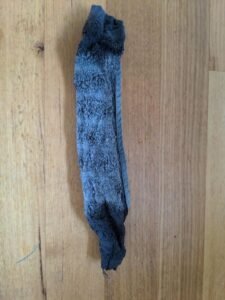
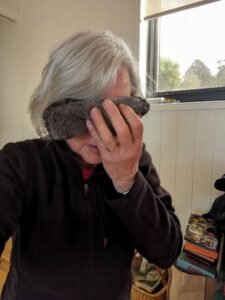
If you have crusty, itchy areas on the edges of your eyelids, this is called blepharitis, caused by blocked oil glands connected to your eyelashes as they grow out of the skin. Gently cleaning the eyelashes with baby shampoo in warm water twice a day, using a cotton bud, will help a lot.
You need to perform the eyelid treatment (using the face washer) at least three times a day, using a fresh face washer each time.
You can use lubricating eye drops 2-3 times a day, but they need to be especially lubricating. The best ones I advise people to use in Australia are HyLo Forte eye drops. However, they are expensive, and with the eyelid massage, you should only need to use the HyLo once a day. A similar product available in the US is OPTASE HYLO relief, with 0.2% sodium hyaluronate.
Monthly Assessment and Adjustments
Week 1-2: Focus on establishing tolerance to basic routine
Week 3-4: Gradually introduce treatment products
Month 2: Assess progress and adjust frequency of active ingredients
Month 3+: Keep going with above routine while watching for possible changes needed with changing seasons.
Emergency Flare Management
When experiencing a rosacea flare, don’t panic!
- Immediately simplify routine to cleanser and moisturizer only
- Apply cool compresses for 10-15 minutes twice daily
- Use Avène Thermal Spring Water spray throughout the day for soothing relief
- Avoid all triggers, including spicy foods, alcohol, sitting in front of a heater or fireplace, and de-stress when possible
- Contact your dermatologist if flare persists beyond 3-5 days
Long-term Management of Rosacea
Rosacea is a chronic condition that requires ongoing management rather than a cure. However, with consistent care:
Within 4-6 weeks: Reduced sensitivity and fewer flare-ups
Within 2-3 months: Noticeable improvement in background redness and inflammatory lesions
Within 6 months: Significant improvement in overall skin quality and trigger tolerance
Long-term: Maintained improvement with occasional adjustments to routine based on seasons, stress, or life changes
The key to successful rosacea management lies in patience, consistency, and working with a dermatologist to develop a personalized treatment plan.
While it may take time to see dramatic improvements, your skin will start to feel less sensitive and irritated within a week of starting treatment- the combination of proper skincare, trigger avoidance, and appropriate treatments can help most people achieve significant control over their rosacea symptoms.





Leave a Reply