Retinoids
ALL ABOUT RETINOIDS
Retinoids are derived from Vitamin A. They are among the most scientifically proven and effective ingredients in dermatology for treating many skin conditions including acne, aging, wrinkles, pigmentation, as well as stimulating new cell growth, thus retinoids have a strong overall skin rejuvenation effect.
Retinoids work by changing how skin cells behave at the genetic level.
They normalize cellular function, accelerate renewal, and stimulate repair processes. This makes them effective for both acne and aged or sun-damaged skin.
Retinoids programme your skin cells to function more youthfully and efficiently.
If you don’t have the time or interest to read through all this scientific stuff, I understand, and you can scroll towards the end of this article where I explain which retinoid you should use and how to use it. But for the curious…
How Do Retinoids Work?
They turn genes on and off that control cell behaviour.
Cell Turnover Acceleration:
- Your normal skin cycle is 28-40 days and increases with age.
- With retinoids the skin cycle (from new skin cell to cell death) is 14-21 days
- This occurs because retinoids stimulate basal (new) cell division, and promote shedding of dead cells
- The result is smoother, brighter skin.
Collagen Stimulation:
- Increased collagen synthesis
- Reduced collagen breakdown
- Stimulates fibroblast activity. Fibroblasts are cells that provide the skin’s structural support.
- Result: Firmer, more elastic skin with reduced wrinkles
Normalized Keratinization:
- Prevents cells from clumping in pores
- Reduces comedone formation (blackheads/whiteheads)
- Improves skin texture and smoothness
Anti-Aging Effects of Retinoids:
Wrinkle Reduction:
- Increased collagen production, improved skin thickness
- Notable improvement will occur within 12 weeks of commencing use.
Hyperpigmentation Improvement:
- More rapid cell turnover removes pigmented cells
- Inhibits tyrosinase, an enzyme that produces the brown pigment melanin.
- Disperses existing melanin more quickly
- Improvement will occur but not until at least 6 weeks use.
Skin Texture Improvement:
- Improved skin cell shedding, increased cell renewal
- Smooths rough patches and improves overall texture
- Minimizes pore appearance through improved cell turnover
Acne Treatment Effects:
Comedone Prevention:
- Mechanism: Prevents abnormal buildup of keratinin ( dead skin cells and other damaged skin proteins) in hair follicles
- Reduces numbers of dead skin cells that clog pores
- Improves shedding of old skin cells that are blocking hair follicles and associated oil glands
Anti-Inflammatory Action:
- Reduces inflammatory compounds in the skin
- Decreases immune system overreaction
- Adapalene has a particularly strong anti- inflammatory effect.
Types of Retinoids:
Here is a summary of the main retinoids:
1 Retinyl Palmitate – Weakest
- Very mild
- Good for sensitive skin, beginners
- Minimal irritation
- Many “anti-aging” creams that you can purchase at drugstores contain Retinyl Palmitate
- Retinol – Mild to Moderate Strength
- Some further application tips:
- Suitable for all skin types with gradual introduction
- May be some mild to moderate irritation initially so need to start slowly (1-2 times a week)
- Retinol-containing products: The Ordinary Retinol series, Olay Regenerist
- Retinaldehyde (Retinal) – Moderate to Strong
- More potent than retinol, gentler than prescription tretinoin
- Suitable for people who want stronger results without a prescription
- More irritation potential
- Avène RetrinAL, Paula’s Choice Retinaldehyde Treatment
- Adapalene (Differin) – Strong
- This is a synthetic “third generation” retinoid
- The strongest non-prescription retinoid- the 0.1% strength is available OTC
- This is a good treatment option for moderate acne
- More initial irritation possible
- Examples: Differin Gel 0.1%
- Tretinoin (Retin-A) – Strongest
- Pure retinoic acid (prescription only)
- Most potent (0.025%, 0.05%, 0.1%)
- Often used on prescription for severe acne, also effective anti-aging treatment
- But has the highest irritation potential, so slow gentle introduction is crucial
- Tretinoin comes as a lotion (Altreno), cream (Avita, Refissa, Renova, Retin-A), and gel (Atralin, Avita, Retin-A)
How to Choose the Right Retinoid:
For People with sensitive skin and/or haven’t used retinoids before:
- Start with Adapalene 0.1% (Differin)
- Another option is CeraVe Resurfacing Retinol Serum
- Don’t start stronger retinoids until you are comfortable ( ie no irritation) using the Adapalene
For Sensitive Skin these are good products:
- The Ordinary Granactive Retinoid– gentlest option
- CeraVe Resurfacing Retinol– has ceramides (fats) to reduce inflammation
- Adapalene– less irritating than tretinoin
For Experienced Users:
- Tretinoin 0.05% – prescription strength for maximum results
- SkinCeuticals Retinol 1.0 – not as strong as Tretinoin but many people find this still effective
- Sunday Riley A+ – high-dose luxury option, many people find these stronger OTC retinoids are much kinder to their skin than tretinoin, and they can use them regularly without irritation.
However, some people do need the stronger Tretinoin to get maximum benefit.
How to Start Using a Retinoid:
- Start:Retinyl Palmitate or 0.25% Retinol
- Increase to:5% then 1% Retinol
- Advanced:Adapalene 0.1% (if targeting acne)
- Expert:Tretinoin (with dermatologist guidance)
For aging and sun-damaged skin, tretinoin remains the strongest and most effective retinoid.
However, Adapalene (Differin) offers a good starting choice, with prescription-level effectiveness at OTC accessibility.
Application Protocol for Best Results:
Starting Routine:
Week 1-2: Apply once weekly (Sunday nights)
Week 3-4: Increase to twice weekly (Sunday, Wednesday)
Week 5-8: Every other night if well-tolerated
Month 3+: Nightly use (advanced users only)
Application Steps:
- Cleanse with gentle, non-drying cleanser
- Wait 20-30 minutes for skin to completely dry
- Apply pea-sized amount to entire face
- Avoid eye area and lips initially
- Follow with moisturizer after 10-15 minutes
- Always use SPF 30+ the next morning
Why Can Retinoids Cause Initial Irritation?:
- Rapid cell turnover initially overwhelms skin
- Barrier disruption from accelerated shedding of skin cells.
- Inflammatory response to cellular changes
Your Skin will become less irritated over the first three months of use.
- Weeks 1-2: Peak irritation as skin adjusts
- Weeks 3-6: Gradual tolerance development
- Weeks 6-12: Irritation subsides, benefits emerge
- Month 3+: Full adaptation, maximum benefits
What Affects Retinoid Activity?:
Skin Factors:
- Barrier integrity – damaged skin barrier causes increased penetration / irritation
- Skin thickness – thinner skin more sensitive- especially the neck, front of chest, and below the eyes
Retinoids Work Better With:
- Moisturizers – reduce irritation, improve tolerance
- Sunscreen – retinoids improve the effects of sunscreens to prevent photodamage, and protect renewed skin
- Antioxidants – improve the anti-aging effects (some people say use separately, but I have made creams with Vitamin A and Vitamin C, and they have worked well) – such as Vitamin C, Vitamin E, green tea extract. Please see my article about Antioxidants for more information
- Gentle cleansers – maintain barrier function
Avoid Combining Retinoids With:
- AHA/BHA acids – can increase irritation (use alternating nights)
- Benzoyl peroxide – can deactivate retinoids
- Vitamin C – potential for irritation (theoretically use at different times)
To get the best Response:
- Start with milder strength
- Consistent, patient use – results take months
- Proper application technique and timing
- Supportive skincare routine
- Professional guidance when needed
Over-the-Counter Retinoids:
SkinCeuticals Retinol 1.0 Maximum Strength
1.0% pure retinol – highest concentration available without a prescription
Comes in a stabilized formula with bisabolol for soothing, reduces irritation
Price: $65-75
Best for: Experienced retinol users, significant aging concerns
Results: Comparable to low-strength prescription retinoids- and because is less likely to irritate, patients can use regularly for maximal results.
Application: Start 2 x /week, build to nightly use
Neutrogena Rapid Wrinkle Repair Regenerating Cream
Accelerated Retinol = stabilized retinol complex
Contains glucose complex and hyaluronic acid, which provides extra hydration, it is gentle so OK for daily use (not initially- start slowly as I have already explained).
Price: $15-25
This Neutrogena retinoid is a good choice for people wanting to try a mild retinoid at an affordable price.
If your skin is not severely damaged you may notice changes within the first week of use- your skin becoming brighter and smoother; however from my experience most people need to use a retinoid for at least 4 weeks to notice improvements.
RoC Retinol Correxion Deep Wrinkle Night Cream
Pure RoC Retinol in time-release formula
Contains extra minerals for skin support, plus Vitamin C , zinc and glycolic acid for extra smoothing and exfoliation.
Clinically proven results
Price: $20-30
Best for: Mature skin, deep wrinkles, budget-friendly option
Results: Smoother skin texture, reduced wrinkle depth
Non-comedogenic formula
Premium/Luxury Retinol Options:
Drunk Elephant A-Passioni Retinol Cream
1% vegan retinol with peptides
Superfruit complex provides extra antioxidant effects
Price: $74
Best for: Ethical beauty clients, general anti-aging
Sunday Riley A+ High-Dose Retinoid Serum
6.5% retinoid ester blend = high concentration, but not as strong as 1% retinol.
However contains CoQ10 and Hawaiian white honey for extra effectiveness. Has numerous good reviews by users.
Many people like its lightweight serum texture
Price: $85
The formula combines multiple retinoid forms
Gentle/Sensitive Skin Options:
CeraVe Resurfacing Retinol Serum:
Encapsulated retinol provides gradual release
Ceramides and niacinamide provide extra barrier support
Gentle, mid-strength, fragrance-free formula
Price: $15-20
Best for: Sensitive skin, retinoid beginners
Results: Gradual improvement with minimal irritation
Dermatologist developed and tested
The Ordinary Granactive Retinoid 2% Emulsion:
- Is a “Granactive” Retinoid – a new formulation of retinol
- Less irritating than traditional retinol
- Lightweight emulsion texture
- Price: $9-12
- Best for: Sensitive skin, budget-conscious users
- Results: Anti-aging benefits with better tolerance
- Can be used daily from the start
What is a Granactive Retinoid?
Granactive Retinoid Strength Comparison
Potency Ranking:
- Retinyl Palmitate – Weakest
- Granactive Retinoid – Mild to Moderate
- Retinol – Moderate
- Retinaldehyde – Moderate to Strong
- Adapalene – Strong
- Tretinoin – Strongest
Characteristics of Granactive Retinoids:
*Less irritating than traditional retinol
*More stable formulation
*Can be used with other active ingredients (vitamin C, niacinamide)
*Suitable for sensitive skin
*No photosensitivity concerns
* Beginner-friendly
However, it is potentially less potent than pure retinol, with slower results.
Some further application tips:
How to use retinoids safely around the mouth
There are conflicting opinions about using retinoids on the lips, yes the skin on your lips is thin and sensitive, and it is often one of the worst areas of sun damage, so if I see a patient with sun damaged lips I would advise them to try less irritating products first, that is a low strength retinoid and to build it up slowly, only apply in the evening, and during the day use a sunscreen designed for lips, such as Kakadu Plum Lip Balm SPF50+ , Wild Rosella Lip Balm SPF50+ or Tropical Lip Balm SPF50+ several times a day
Aloe vera, cold compresses, and anti-inflammatory medications can help relieve symptoms if your lips become irritated or inflamed from using the retinoid cream.
There are stronger medical treatments for severely sun-damaged lips (“actinic cheilitis”). This can progress to full-blown skin cancers, so if you have inflamed, cracked, sore, or bleeding areas on your lip that aren’t healing, you should see a skin specialist about it before starting any treatment yourself.
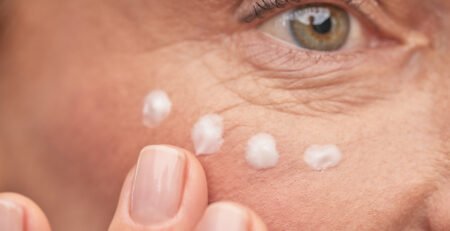
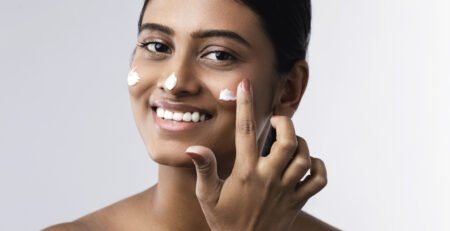
When using retinoids for your whole face, you could try an application method like the 13-dot technique to target the thicker parts of the face while avoiding the delicate skin around the mouth.
– Apply three dots across the forehead.
-Apply three dots on each cheek, one on the cheekbone and two below.
-Apply two dots, one on each side of the nose.
-Apply two dots on the chin.
-Gently blend the product across the face, until evenly distributed
Managing Side Effects of Retinoids:
Common Initial Reactions:
- Redness and peeling (weeks 2-6)
- Dryness and flaking
- Increased sensitivity
- Temporary breakouts
Minimizing Irritation:
- Start slowly – patience is key
- Use gentle, fragrance-free products
- Apply to dry skin only
- Sandwich method: moisturizer + retinoid + moisturizer
- Take breaks if irritation becomes severe
I have seen patients who have continued to use tretinoin despite it causing irritation with redness and painful little lumps. The way to deal with this is
- Stop using the tretinoin
- Use a thick barrier cream moisturizer such as La Roche-Posay Cicaplast Baume B5+ 2-3 times a day, after using CeraVe Hydrating Cleanser in the morning and evening. You could just use the Cicaplast cream and skip the cleanser, but theoretically, the cleanser will also help your skin recover better.
- When your skin has settled completely, start a milder retinoid such as The Ordinary Granactive Retinoid 2% Emulsion for a month or so, commencing with two evenings a week
- You can increase to Differin after a month or so after using the granactive retinoid
- If things are going well after another month or so you could recommence the tretinoin, but use the Cicaplast barrier cream first, the tretinoin will still penetrate, and the Cicaplast will stop your skin barrier from being damaged.
- Some people just can’t tolerate tretinoin and have to stick to a lower strength retinoid- but the thing is, because their skin is extra sensitive, the lower strength retinoid will be more effective.
- Don’t forget, if you have problems, you should get professional advice. DIY skin care is OK, but not if you are having issues that aren’t resolving.
When Will You See Results?
4-6 Weeks:
Improved skin texture and smoothness
Reduced appearance of pores
Initial fine line softening
3-6 Months:
Significant wrinkle reduction
Improved skin tone and brightness
Reduced hyperpigmentation
Enhanced skin firmness
6-12 Months:
Maximum anti-aging benefits
Major improvement in sun damage
Long-term skin health improvements
When will you notice effects from the particular retinoid you are using?
Tretinoin: 4-6 weeks
Adapalene: 6-8 weeks
Retinol: 8-12 weeks
Retinyl Palmitate: 12+ weeks
Irritation Potential:
Highest: Tretinoin then Adapalene
Moderate: Retinaldehyde then high-strength Retinol
Lowest: Low-strength Retinol then Retinyl Palmitate
Best Value Options:
- Adapalene (Differin) – prescription strength at OTC price
- CeraVe Resurfacing Retinol – gentle, effective, affordable
- The Ordinary Granactive Retinoid- affordable retinoid
Combination Strategies-Using Retinoids with Other Active Ingredients
Morning: Vitamin C serum + moisturizer + SPF
Evening: Retinoid + hydrating serum + moisturizer
Alternate nights: Retinoid / AHA-BHA alternating (advanced users)
Professional Treatments for Improved Skin Rejuvenation:
Chemical peels – enhance retinoid results
Microneedling – can be combined safely
Laser treatments – discuss timing with dermatologist
When to See a Dermatologist:
Consider Professional Consultation For:
*Severe sun damage requiring prescription-strength treatment
*Persistent irritation from OTC products
*Multiple concerns (eg acne + aging)
*Professional-grade product advice
*Skin damage not responding to the treatments I have described
*Any new or changing lesions, especially brown, with irregular shape or color, could be a sign that you are developing a malignant melanoma and need urgent professional assessment.
*Inflamed, raised, thick, tender, or bleeding patches of skin on sun-exposed areas- all signs of other types of sun-induced skin cancers.
Availability:
- OTC(drugstore) : Retinyl Palmitate, Retinol, Retinaldehyde, Adapalene 0.1%
- Prescription: Tretinoin, higher-strength Adapalene, Tazarotene
While tretinoin is considered more potent, adapalene at 0.1% concentration has been shown to be as effective as tretinoin 0.025% for reducing acne lesions, and is much gentler.
The key to success with any retinoid is consistent use, proper application, and patience – results take months.
The improvements that regular use of retinoids cause- in skin texture, tone, and aging signs are significant and proven in many scientific studies.



Leave a Reply