
Acne – New Treatment Options
THE LATEST TREATMENTS FOR PEOPLE SUFFERING FROM ACNE
Most doctors would treat acne with antibiotic tablets, combined with a cream containing a combination of antibiotic and retinoid (Vitamin A), for example Epiduo. And for severe cystic acne not responding to these treatments, Isotretinoin (a stronger form of Vitamin A) tablets are prescribed.
Please note if you are reading this article because you are concerned about your acne, also have a look at the article “Retinoids” also, AHAs and BHAs, which are both used a lot for treatment of acne.
Isotretinoin is a whole other topic; suffice to say, while it kills the oil glands in your skin, it can have long-term side effects, including persistent skin issues (dry skin, hair thinning), mental health problems (depression, anxiety), and gastrointestinal issues (IBD, constipation). However, most patients don’t get severe side effects, or the side effects improve over time. And Accutane is sometimes the only treatment that works for people with severe inflammatory acne.
What can be overlooked is the need to identify and address the underlying cause of the acne.
This can be summarized as
*Genetic, as we all know, acne runs in families.
*Skin type-people with oily skin are more likely to develop acne
* Diet – There is evidence that sugary foods aggravate acne, as well as fast foods, which often contain extra sugar, even in the bread used for hamburger buns. Sugar is composed of one molecule of glucose and one molecule of fructose. Sugar, fructose, high-fructose corn syrup, and many artificial sweeteners can be detrimental to your skin. Did you know that the average sports drink contains 5-6 teaspoons of sugar?
For example, WebMD and Health Central report that aspartame can cause contact dermatitis, an allergic reaction that causes an itchy rash. Some studies suggest that aspartame may also contribute to skin inflammation due to the buildup of formaldehyde, a metabolite of aspartame. However, this varies. Some people are more affected than others. Again, this illustrates the significant impact of genetics on our health.
Sweeteners such as stevia, monk fruit, erythritol, and xylitol are less harmful. You should look for these on the labels of drinks and food you are consuming.
Also, dairy (cow’s) milk stimulates the growth of oil glands in the skin, whereas fermented milk products such as (unsweetened, natural) yogurt or kombucha (not sweetened with sucrose) are beneficial.
Poor nutrition can cause skin damage, especially low intake of Vitamin C and Vitamin D, and zinc. Vitamin D deficiency has been associated with an increased risk of eczema, psoriasis, and acne. Teenagers often have poor diets that are lacking in these important nutrients.
Other medical conditions may cause acne, with polycystic ovarian syndrome being the main one in older girls and women. It leads to irregular periods and male-pattern hair growth on the face and body, and sometimes thinning of the scalp hair. This occurs due to excessive testosterone production, which increases skin oiliness and the likelihood of acne. It can be diagnosed through ultrasound and blood tests.
*Excessive use of over-the-counter acne products, including cleansers and exfoliants. These products can damage the skin’s natural balance of micro-organisms and make the skin too alkaline, which encourages the growth of acne-causing bacteria (Cutibacterium acnes).
The most important thing to understand is the importance of the skin’s microbiome. (I have written a separate article about this important topic.) The microbiome is a complex ecosystem of microorganisms, primarily bacteria, fungi, and viruses, that live on the skin’s surface and in the hair follicles, in happy coexistence. They play a crucial role in maintaining skin health. When the microbiome is not functioning properly, skin disease will occur. I will discuss this further in future articles about skin conditions.
It is now recognized that the skin’s microbiome functions best when it is at a low pH (more acid than alkaline). Many over-the-counter skin treatments actually damage this delicate balance.
So if we take as an example Hamish, a young man of 17 who has moderate inflammatory acne, that has not responded to treatments he has tried on the advice of chemists and online chat groups.

PHOTO COURTESY OF DERMNETNZ
Mild- moderate inflammatory acne
https://www.pcds.org.uk/clinical-guidance/acne-vulgaris
The type of acne in the photo above is moderate inflammatory acne on the chin extending to the cheeks.
A short course of medical treatment for a month, followed by the use of cleansers and moisturizers to maintain a slightly acidic skin pH, is likely to be effective. However it would be a good option for him to try just using the cleanser and lotion for up to 8 weeks, without stronger treatments.
A way to assist him would be to advise him to use
1) A non-foaming cleanser at pH (acidity) of 4.5- choose one of:
Cetaphil Gentle Skin Cleanser or
CeraVe Hydrating Facial Cleanser or
2) A gentle acid-based lotion to apply after cleansing, which reduces the amount of Cutibacterium acnes bacteria on his skin by making the skin surface slightly more acidic.
I recommend:
Paula’s Choice 2% BHA Liquid Exfoliant
( OR )
CeraVe Acne Control Gel
Hamish should wash with the non-foaming cleanser twice a day, followed by the acid-based lotion. He should wash the lotion off with water after about 10 minutes or earlier if it causes stinging. As he gets used to the acid lotion, he can leave it on all day after a week or two.
There are other options -retinoids, salicylic acid lotions, anti-bacterial drying products such as benzoyl peroxide- these are the traditional treatments as I have described in the table below. But the newer approach of correcting the skin’s mantle/microbiome and achieving optimal (slightly acidic) pH is worth trying first.
He used the cleanser and lotion, and when Hamish returned after 8 weeks, he was much improved. His active acne had reduced by 80%, with only a few new spots. However, he did say that his skin felt a bit dry (probably due to the acid-based lotion),
In this situation, I would prescribe a moisturizer such as
CeraVe Daily Moisturizing Lotion or Neutrogena Oil-Free Moisture Gel SPF 15
He can use this once or twice a day.
I mentioned at the start of this article the traditional treatments that doctors use, and there is no doubt they are effective.
To be honest, many patients with moderately severe acne will need these medical treatments first for a month or two, to get a quick improvement, while continuing to use the cleansers and moisturizers I have recommended, as well as making dietary changes.
However, someone with the sort of mild-moderate acne like Hamish could just try a pH-based approach with the cleanser and lotion first.
And yes, sometimes the only treatment that will make a real difference is Accutane tablets. I have seen patients who have valiantly tried to treat their own acne, and by the time they seek medical assistance, they are already developing scarring.
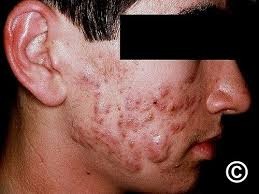
https://www.pcds.org.uk/clinical-guidance/acne-vulgaris
This degree of scarring should never have happened, and he is a prime candidate for a six-month course of accutane prescribed by a dermatologist; this should reduce the scarring by at least 70%, he will probably be left with pock-marks on his face but no active inflamed scars and cysts like those shown in the photo.
Detailed Sample Weekly Acne Traditional Treatment Regime for Mild to Moderate Acne (without cysts or scarring)
| Day | Morning Routine | Evening Routine | Notes |
| Monday | Gentle cleanser + Differin Gel (adapalene 0.1%) + Moisturizer + SPF | Gentle cleanser + PanOxyl (benzoyl peroxide 4%) + Moisturizer | Start with lower concentrations |
| Tuesday | Gentle cleanser (CeraVe Foaming Facial Cleanser) + Differin Gel + Moisturizer + SPF | Gentle cleanser + PanOxyl + Moisturizer | Monitor for dryness/irritation |
| Wednesday | Gentle cleanser + Differin Gel + Moisturizer + SPF | Gentle cleanser + Paula’s Choice BHA (salicylic acid 2%) + Moisturizer | Alternate BHA for variety |
| Thursday | Gentle cleanser + Differin Gel + Moisturizer + SPF | Gentle cleanser + PanOxyl + Moisturizer | Return to benzoyl peroxide |
| Friday | Gentle cleanser + Differin Gel + Moisturizer + SPF | Gentle cleanser + PanOxyl + Moisturizer | Consistency is key |
| Saturday | Gentle cleanser + Differin Gel + Moisturizer + SPF | Gentle cleanser + Paula’s Choice BHA + Moisturizer | Weekend BHA treatment |
| Sunday | Gentle cleanser + Differin Gel + Moisturizer + SPF | Gentle cleanser + PanOxyl + Moisturizer | Prepare for new week |
Main Treatment Products
- Adapalene: Differin Gel 0.1% (OTC retinoid)
- Benzoyl Peroxide: PanOxyl 4% or PanOxyl10% wash/gel
- Salicylic Acid: Paula’s Choice 2% BHA Liquid Exfoliant
Supporting Products
- Gentle Cleanser: CeraVe Foaming Facial Cleanser or Neutrogena Ultra Gentle Daily Cleanser
- Moisturizer: CeraVe Daily Moisturizing Lotion or Neutrogena Oil-Free Moisture Gel
- Sunscreen- non comedogenic: EltaMD UV Clear or Neutrogena Clear Face SPF 30
If there has not been significant improvement (Weeks 4-8)
- Start prescription creams: Clindamycin gel (morning application)
- Azelaic Acid: Finacea Gel 15% or Paula’s Choice Azelaic Acid Booster 10%
- Stronger Retinoids: Tretinoin 0.025% (prescription required)
For Moderate to Severe Cases not Responding to Above Treatments:
- Oral Antibiotics: Doxycycline 50-100mg daily
- Combination Therapy: Continue topical treatments with oral medication
- People with severe acne or acne that is not responding to topical treatments (creams/ lotions/ moisturizers) should seek professional advice from a dermatologist.
Key Implementation Guidelines
Begin with benzoyl peroxide and adapalene as the foundation
Retinoids (such as Differin, adapalene, and tretinoin) and antimicrobials, including benzoyl peroxide and antibiotics, are the primary topical (applied to the skin) acne treatments.
Important Notes:
- Start with lower concentrations of retinoids and gradually increase as tolerated
- Topical retinoids are the main treatment for comedonal or mild papulopustular acne
- Consistency over 8-12 weeks is essential for optimal results
- Always use SPF during the day when using retinoids and azelaic acid.
Before using a new product with multiple ingredients, you should perform a patch test. Put a small amount of the cream or serum on about a 2 x 2-inch patch of skin on the inside of your upper arm for about two hours, while checking if any irritation or redness develops. If you do notice some irritation then wipe the cream off with warm water and apply a gentle moisturizing cream such as dermaveen or cetaphil. You could try repeating the patch test after 24 hours, as your skin may start to tolerate the cream and exhibit less inflammation.
More severe scarring will require accutane, and may also need laser resurfacing, microneedling or surgical excision, depending on the effects of the Accutane.
So, try to get your acne treated early and effectively to avoid these long-term consequences.




Leave a Reply